NBA Prop Limits in the UK: Why Your Stake Got Cut
 Available in US
Table of Contents
- The £15 Tyrese Haliburton Slip That Got Voided
- What A Prop Limit Actually Looks Like
- Why The Books Cut You Specifically
- How Limits Move Across A Game Week
- The Markets That Get Hit Hardest
- Bookmaker Behaviour Varies More Than You’d Think
- What To Do When Your Slip Gets Cut
- The Bigger Picture For UK Prop Bettors
- Working Within The Caps
The £15 Tyrese Haliburton Slip That Got Voided
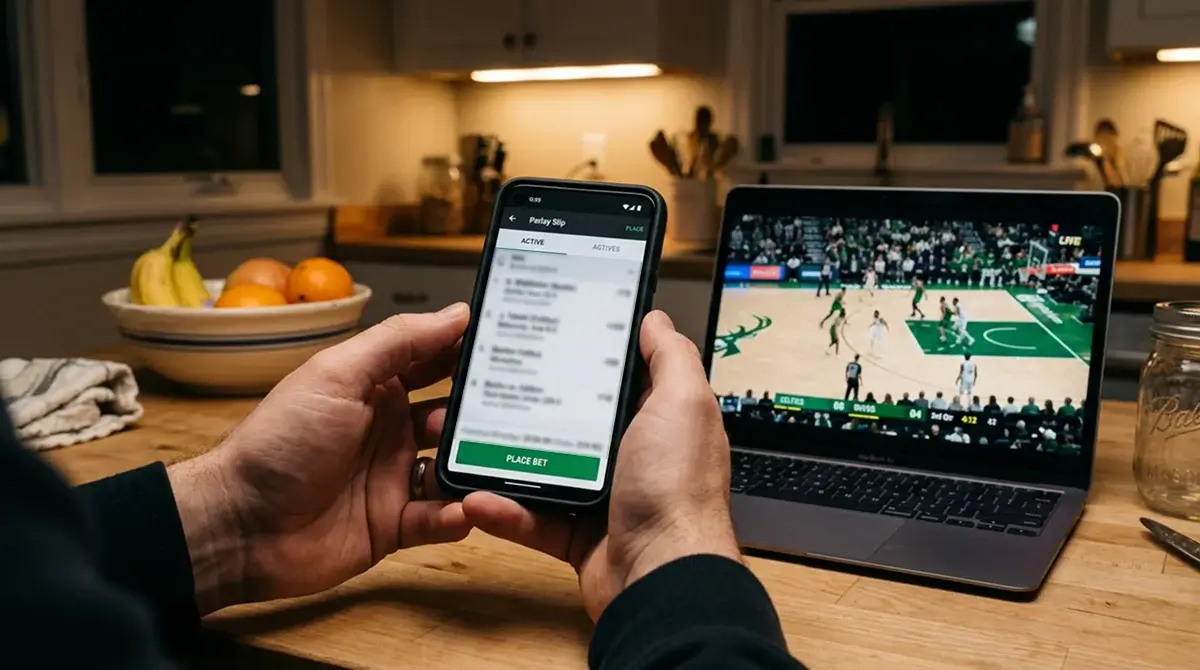
March 2025. I tried to drop £15 on a Tyrese Haliburton over 7.5 assists prop. Click. Refresh. Click again. The bet kept rejecting at £4.20 maximum stake. Same book had taken £200 on the moneyline ten minutes earlier. That gap – £200 on a side, £4.20 on a prop – is the entire conversation around NBA prop limits in one screenshot. It’s not a glitch. It’s policy.
UK books treat prop markets as a different risk category from sides and totals. Liquidity is thinner, lines move on a single tweet from a beat reporter, and the books know full well that a chunk of prop action comes from people with edges they don’t have. So they cap exposure aggressively. If you’ve ever wondered why your slip got cut to a fiver, this is why.
I’ve been on this desk eight years. The pattern of which props get throttled and which don’t isn’t random – there’s a logic to it, and once you see the logic, you can structure your week around it instead of fighting it.
What A Prop Limit Actually Looks Like
A prop limit is the maximum stake a book will accept on a specific player or game prop, and it’s almost always lower than the side or total limit on the same fixture. On a regular-season Knicks-Bucks game with sides up to £2,000, you’ll commonly see player points props capped between £100 and £400, assists props between £50 and £200, and exotic markets like double-doubles or first basket scorer at £25 to £75. Two-way contract player props and 10-day contract player props frequently sit at £10 maximum or get pulled entirely.
The Senate Commerce Committee letter from Senators Cruz and Cantwell to Adam Silver in late 2025 made a specific point about this – they pushed the league on whether props on fringe roster players were too easy to manipulate. Adam Silver responded by pulling props for two-way and 10-day contract players entirely from sportsbook offerings the league has influence over. UK books followed the same logic, even though they’re regulated separately. If you’ve tried to find a prop on a G-League call-up signed Tuesday, you’ll know.
The other thing worth understanding: limits are dynamic. A book might offer £200 max on a Jayson Tatum points prop at 11am on gameday and drop that to £40 by 7pm because line movement told them sharps were piling in. The number you see when you click “place bet” is the number that matters – not the one in the help section.
Why The Books Cut You Specifically
Here’s the part nobody likes hearing. Account-level limits exist on top of market-level limits. If a book has flagged your account as a sharp prop bettor – which they do based on closing line value, win rate on specific market types, and bet timing relative to line moves – your personal max on props can be a fraction of the advertised limit. I’ve had accounts where the public limit on a Luka Dončić rebounds prop was £150 and my personal max was £8.
The 2025/26 season has made this worse, not better. NBA pace hit 101.9 possessions per 48 minutes, the highest in 30 years, and league offensive efficiency sits at 114.3 points per 100 possessions, near the all-time peak of 114.5. More possessions and more efficient possessions mean more variance per game, which means more volatile prop outcomes. Books respond to volatility by cutting exposure. The first 10 days of this season averaged 117.7 points per game – third-highest in NBA history and the highest in 64 seasons. That’s not a stat, it’s a risk profile, and the trading desks adjusted.
What “flagging” actually involves: Stats Perform’s Andrew Skweres has talked publicly about how books layer contextual data into their pricing – he noted “a sportsbook saw a 1.3× increase in bet count and double the average stake size after they included a contextual stat next to markets”. Same data lets them spot bettors who are using context the public ignores. If you bet props five minutes after the official injury report drops at 11am, every time, the book sees that pattern.
How Limits Move Across A Game Week
Prop limits aren’t static through the day. They follow a curve, and understanding the curve is the difference between getting £100 down and getting £15 down on the same market.
Tuesday or Wednesday morning, props open with conservative limits – sometimes £25 to £50 – because the book’s traders haven’t fully built out the model yet and they don’t want to take big positions on stale numbers. By midday gameday, after the 22 December 2025 injury report rules kicked in (every 15 minutes during the 11:00-13:00 window for evening tips), limits typically expand to their daily peak. They hold roughly there until the final injury report at 30 minutes pre-tip, then collapse fast.
Inside the last 15 minutes before tip-off, you’ll see prop limits drop by 50-80% on most markets. Books don’t want exposure to late lineup news they can’t react to. After tip-off, in-play props open with even tighter limits, sometimes a quarter of the pre-game number, and they tighten further every time the score swings or a star picks up two early fouls.
The practical move: if you’ve done your work and you want size on a prop, the window between roughly 90 and 30 minutes pre-tip is when you’ll get the most stake through. Earlier and the book hasn’t opened up. Later and it’s already retracting.
The Markets That Get Hit Hardest
Some props get capped lower than others, consistently. The pattern reflects which markets the books think they’re losing money on.
Lowest limits, in my experience: first basket scorer (this is a coin flip dressed up as skill, and books still cut it because of correlation plays), milestone props like first to 20 points, race-to-X props between two named players, and any prop with “alternate” lines stretched far from the main number. Combo props – a player’s points plus rebounds plus assists – sit slightly higher than single-stat props but lower than sides. Standard player points props on stars are usually the highest of the prop categories, sometimes within a factor of three of side limits.
Props on benchwarmers and end-of-rotation players are a special case. The Federal indictments unsealed on 23 October 2025, charging 34 individuals including Chauncey Billups and Terry Rozier, leaned heavily on props with low betting interest where price-fixing was easier to execute. Andrew Rhodes, the UKGC chief executive, has been vocal at industry briefings about how operators need to monitor exactly these kinds of low-volume markets for unusual patterns. UK books absorbed that lesson – bench player props now carry £10 to £25 limits at most operators, sometimes are pulled entirely on the morning of the game.
Bookmaker Behaviour Varies More Than You’d Think
Top UK books – bet365, William Hill, BetVictor, Unibet, Betfred – list 50+ markets per NBA fixture, but the limits behind those markets aren’t uniform.
The bigger trading operations carry higher prop limits because they have the manpower to price 50 markets across 12 NBA games and react in real time. Smaller books that source prices from a feed often run lower limits to protect against being slow to a move. Recreational-leaning books – the ones with cashback offers and bet builders front and centre – tend to cap props lower because their target customer doesn’t need £500 down on a Donovan Mitchell rebounds line.
| Market type | Typical max stake range | How fast it moves |
|---|---|---|
| Star player points | £100-£400 | Slow until injury news |
| Star player rebounds/assists | £50-£200 | Slow until injury news |
| Combo P+R+A | £40-£150 | Moderate |
| Bench player single-stat | £10-£25 | Fast |
| First basket scorer | £10-£40 | Fast pre-tip |
| Two-way / 10-day contract props | Often pulled | – |
These are starting numbers. Your account-specific maxes can be lower if you’ve shown sharp behaviour, or – rarely – higher if you’ve shown the opposite.
What To Do When Your Slip Gets Cut
You’ve done the work, the angle is solid, the limit slaps you with £8 max. Now what?
First, don’t try to circumvent. Stacking the same prop across five accounts on the same household IP is the quickest route to having all five accounts closed and your withdrawals delayed indefinitely. UK regulation has tightened on this – the Gambling Commission has issued over 770 cease-and-desist notices since April 2024, including 262 to operators and 205 to advertisers, and Andrew Rhodes has been explicit that account integrity is part of the same enforcement push. The cleanest accounts win the long game.
Second, consider whether the limit is telling you something. If three different books all cut you to £15 on the same prop, the market is telling you the line is wrong, the lineup news is uncertain, or you’re being read. Sometimes the limit is the signal – pass on the bet rather than force size through.
Third, restructure. A £8 max on a single prop becomes a meaningful position when paired with two correlated props in a same-game parlay where the combined limit is often higher in absolute terms. A handful of small singles across uncorrelated games achieves what one big single can’t. Line shopping helps too – identical Jaylen Brown points props can have £30 max at one book and £150 max at another for reasons that aren’t always obvious to anyone outside that book’s trading desk.
Fourth, accept the ceiling. If your edge on Karl-Anthony Towns rebounds props is real and the books cap you at £20, you’ll grind a small but positive number over a season rather than a large one. That’s still a win – most prop bettors are red over twelve months, so being green at any size is a result.
The Bigger Picture For UK Prop Bettors
UK gambling participation hit 48% of adults in the most recent UKGC figures, with online sector GGY at £7.8 billion for the financial year ending March 2025. Remote betting GGY came in at £2.4 billion. Those are large numbers, but the prop component is a small slice – most volume sits on sides, totals, accumulators, and SGPs. That’s why prop limits look the way they do: the books are servicing a thin-volume, high-edge-density market, and they price the risk accordingly.
The 12.7 million monthly active accounts the UKGC reported for Q3 2025/26 – down 2% year on year – tells you the customer base is broadly stable but real-event GGY is down 18% YoY, which suggests margin compression. Books are getting tighter, not looser, on the markets where customers have the most edge. Props are at the front of that queue.
Adam Silver said at the NBA Cup Final in December 2025 that competitive integrity is the league’s top priority, and he’s spoken multiple times about how regulated betting markets help monitor for problems that unregulated markets don’t. UK props aren’t the issue there – they’re highly regulated. But they are the markets where the books carry the most informational risk relative to size, which is exactly why they cut your stake.
If you want to read more about how prop pricing actually gets built before the limits kick in, my piece on how positional context shapes player prop lines covers the input side of the same equation.
Working Within The Caps
Limits are a tax on edge. You don’t beat them, you operate around them. The bettors who do best in this market accept the cap, focus on getting their stake at peak liquidity windows, spread across two or three books to multiply effective limits, and treat each £20 max bet as one row in a long ledger rather than one shot at a payday. Over a 1,230-game regular season, even a 3% edge at £20 a click adds up to a meaningful number – and you keep the accounts open to do it again next year.
Why is my prop bet stake lower than my moneyline stake?
Prop markets carry thinner liquidity and higher informational risk than sides, so books cap exposure on props more aggressively. Account-specific limits also apply on top of market limits if your betting pattern flags as sharp.
Do prop limits change during the day?
Yes. Limits typically expand from morning to roughly 90-30 minutes pre-tip, then drop sharply in the final 15 minutes before tip-off and again once in-play markets open.
Can I bet bigger by splitting across multiple accounts?
No. Stacking the same bet across multiple accounts in one household is detected quickly and triggers account closures. Use multiple bookmakers under your own name instead.
Prepared by the bet of the day nba editorial staff.