NBA Injury Report Rules: How the 15-Minute Update Changed Betting
 Available in US
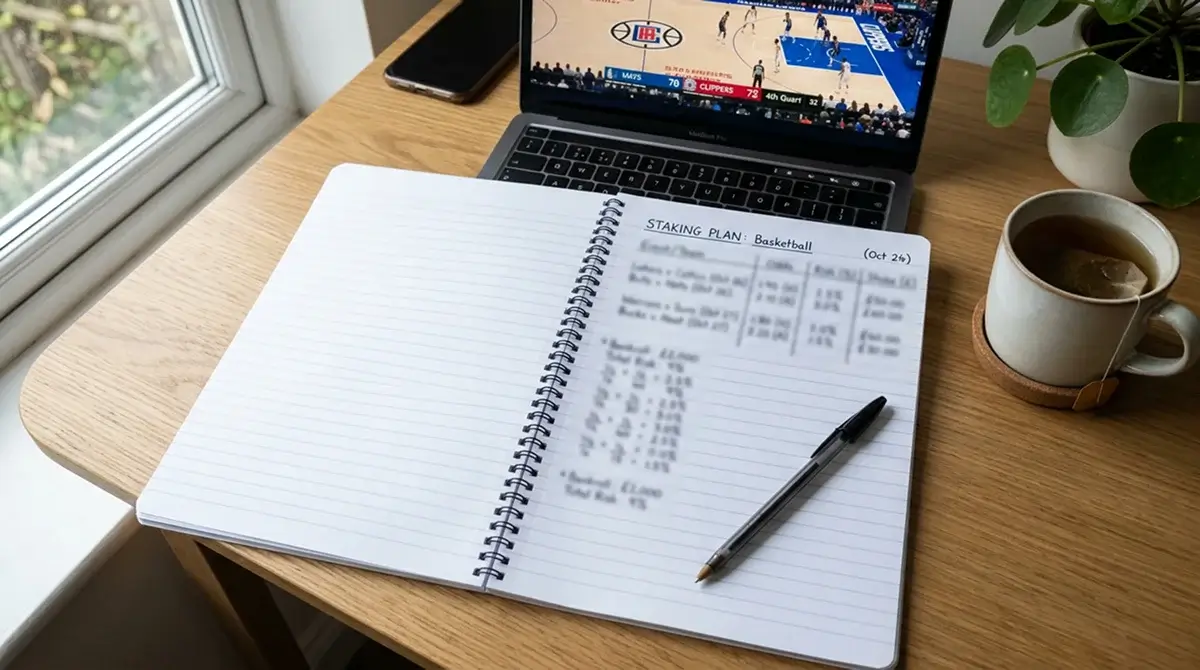
I was placing a Knicks-Lakers prop bet at about 7pm UK time on 23 December 2025 when the injury report updated for the second time in 20 minutes. Then again 12 minutes later. By the time the line tipped off I had watched four updates roll through, the prop line had moved twice, and I had a real-time demonstration of why the league had just changed the rules. The old hourly cadence felt slow. The new 15-minute cadence felt urgent.
This is the working version of what changed on 22 December 2025, why the league did it, and how UK punters should now think about timing their bets around the new reporting rhythm.
What the Old Injury Report Looked Like
For most of the past decade, NBA injury reports updated on a relatively predictable hourly schedule. Teams filed their initial report typically the day before the game, listed players as out, doubtful, questionable or probable, and updated as roster decisions firmed up. The final filing window was a few hours before tip-off.
The system worked, in the sense that bettors and bookmakers had a shared understanding of when information would arrive. The problem was that it gave teams a fairly long window in which to keep their final lineup decisions ambiguous. A starter listed as “questionable” at 4pm local time might play, might not, and the reasoning behind the decision was rarely transparent. The market priced the ambiguity into the lines, but the ambiguity itself was a feature of the system, not a bug to be solved.
The system also created opportunities for bad actors. If a player or someone close to the player knew that a “questionable” listing was actually going to result in a late scratch – a decision the public wouldn’t see until 30 or 45 minutes before tip-off – there was a window in which to act on that knowledge. Most of the betting market accepted this as a known limitation. After the events of 2024 and 2025, the league concluded the limitation was no longer acceptable.
The 22 December 2025 Overhaul
The new rules went into effect on 22 December 2025 with three distinct changes that together rewrote how injury information flows in the lead-up to a game. First, injury reports must now update every 15 minutes in the lead-up to tip-off. The hourly cadence is gone. Teams have to refresh their reports four times an hour, every hour, until the game starts.
Second, an additional gameday filing window was introduced between 11:00 and 13:00 local time for evening games. This window provides an early indication of likely roster availability hours before the previous system would have produced one. Teams that previously held their cards close until afternoon now have to declare their best estimate of availability around midday.
Third, for matches with tip-off times of 17:00 local or earlier – afternoon games, particularly weekend nationally-televised slates – there is an earlier filing window between 8:00 and 10:00 local time. This handles the early-tip cases where the standard windows would not provide enough lead time.
The combined effect is that injury information now flows in a steadier, more predictable stream throughout the gameday rather than in occasional bursts followed by hours of silence. For a UK punter, this means the prop line you see at 6pm UK (1pm US Eastern) is updating with much more frequent fresh information than it would have done two years ago.
The trigger for these changes was specific. The events of 23 October 2025, when 34 individuals including current and former NBA players and head coach Chauncey Billups were arrested and charged in a federal indictment over alleged sports betting fraud, made clear to the league that information asymmetry around player availability had become a competitive integrity issue. Some of the alleged patterns in the case involved knowing in advance that a “questionable” player would not play, and acting on that knowledge in the betting market. The 15-minute rule is the league’s structural response.
The 8-10 and 11-13 Gameday Windows
The two gameday windows are where the new system most visibly differs from the old one. Under the old rules, a UK bettor placing a wager at lunchtime UK time (early morning US Eastern) was operating largely on the previous evening’s injury report. Under the new rules, the early-tip filing window between 8 and 10am local time means that for any afternoon NBA game, fresh roster information is published before the European trading day even gets going.
For evening NBA games – most of the regular slate – the 11am to 1pm local filing window means the UK bettor has fresh information from roughly 4pm to 6pm UK time, well before the typical UK evening betting peak. This is a substantial change in how UK punters should structure their pre-bet research. The “I’ll check the injury report when I get home from work” approach now arrives at the bet slip with information that is already several updates old.
The practical implication is that the optimal time to place an NBA bet from the UK has shifted later in the gameday cycle. The old advice – “bet early, before the line moves” – is harder to apply when the line is being repriced every 15 minutes by fresh information. The new advice is more nuanced: form your view early, but place the bet only after the relevant gameday filing window has closed and the headline roster information has stabilised.
The exception is when you have a strong directional view that the market has not yet priced. If you believe a “questionable” star is actually going to play and the line is reflecting an absence-priced expectation, betting before the report confirms his availability captures the line move you anticipate. That bet requires confidence in your read, not just a hunch about what the team will decide.
How UK Punters Should Time Their Bets
The framework I use now has three time windows for bet placement. The first is “view formation” – the day or two before the game, where I read the schedule, the matchup, the previous-game data, and form an initial view on what I think the line should be. I don’t bet here. I just decide what I think.
The second is “first read” – after the relevant gameday filing window has closed, when the headline roster information is on the table. This is typically late afternoon UK time for evening NBA games. I check whether the actual roster matches my expectations, adjust my view if needed, and place the bet if my view still differs from the line by a meaningful margin.
The third is “final read” – the last 30 to 60 minutes before tip-off, when the 15-minute updates are firing and the live line is responding to each one. I rarely place new bets here, but I do watch the line for signs that information has emerged that I missed. If the line moves sharply in the final 20 minutes against a position I have already taken, I treat that as feedback on my analysis rather than a signal to chase the move.
What this framework deliberately avoids is the knee-jerk response to each individual 15-minute update. The temptation is to refresh the prop screen every few minutes and react to every micro-update, which is exhausting and counterproductive. The line is moving, but most of the moves are small, and the cumulative effect of small moves is what matters – not any individual one.
Adam Silver framed the value of the new system clearly: “with this regulated structure of legalised betting, we can monitor it in ways that were unimaginable years ago. If there’s any aberrational behaviour – people betting large numbers who hadn’t historically done so, just opening an account to place bets, or even the geotargeting – we know exactly from where the bets are being placed.” The 15-minute rule is part of that monitoring infrastructure, designed to make information flow consistent and detectable.
How UK Books Reacted
UK books have adapted to the new reporting cadence at different speeds. The bigger operators – bet365 in particular – have algorithmic line adjustment systems that respond to new injury data almost in real time, and the prop lines on their platforms move within minutes of each report update. The smaller operators are slower, with line moves sometimes lagging the official update by 10 to 20 minutes. The asymmetry creates short windows where the slower book is offering a price that the faster books have already moved past.
The other change is suspension behaviour. UK books are now more likely to briefly suspend prop markets in the moments around each 15-minute update, particularly when the previous update flagged a key player as “questionable”. The suspension is short – typically a minute or two – but it removes the ability to place a bet in the moments when the new information is still being absorbed. Bettors who try to act in those windows find their bet rejected.
The bet builder and SGP markets have absorbed the changes most visibly. The correlation models that price these multi-leg bets need to incorporate the latest individual prop adjustments, which means SGP prices now move every 15 minutes in line with the underlying components. The bet builder you constructed at 6pm UK is unlikely to still be available at the same price by 7pm.
The structural takeaway for UK punters is that the betting market is now operating on a tighter information cycle than it was two years ago. The advantages of being a “fast” bettor – placing bets quickly after fresh information drops – have shrunk because the books are also faster. The advantages of being a “thoughtful” bettor – placing fewer bets but with higher confidence on each one – have grown, because the lines you place against are more informed and the marginal calls are tougher. If you want to understand the broader integrity context that drove these rule changes, the natural next read is my piece on the 2025 NBA scandal.
FAQ
What time exactly do NBA teams have to file injury reports now?
The cadence is every 15 minutes throughout the lead-up to tip-off. There are also two specific gameday filing windows: 8:00 to 10:00 local time for matches with tip-off at 17:00 local or earlier, and 11:00 to 13:00 local time for evening games. After those windows the 15-minute updates continue until the ball goes up.
Do UK books re-price props after each 15-minute update?
The bigger UK operators reprice within minutes of each update, often automatically through algorithmic line adjustment. Smaller operators sometimes lag by 10 to 20 minutes, creating brief windows where their price has not yet caught up to the new information. Most operators also briefly suspend prop markets around update times when the report flagged a key player as questionable, which prevents new bets being placed during the absorption window.
Created by the ”bet of the day nba” editorial team.