NBA Cup Betting UK: A New Tournament With Its Own Pricing Quirks
 Available in US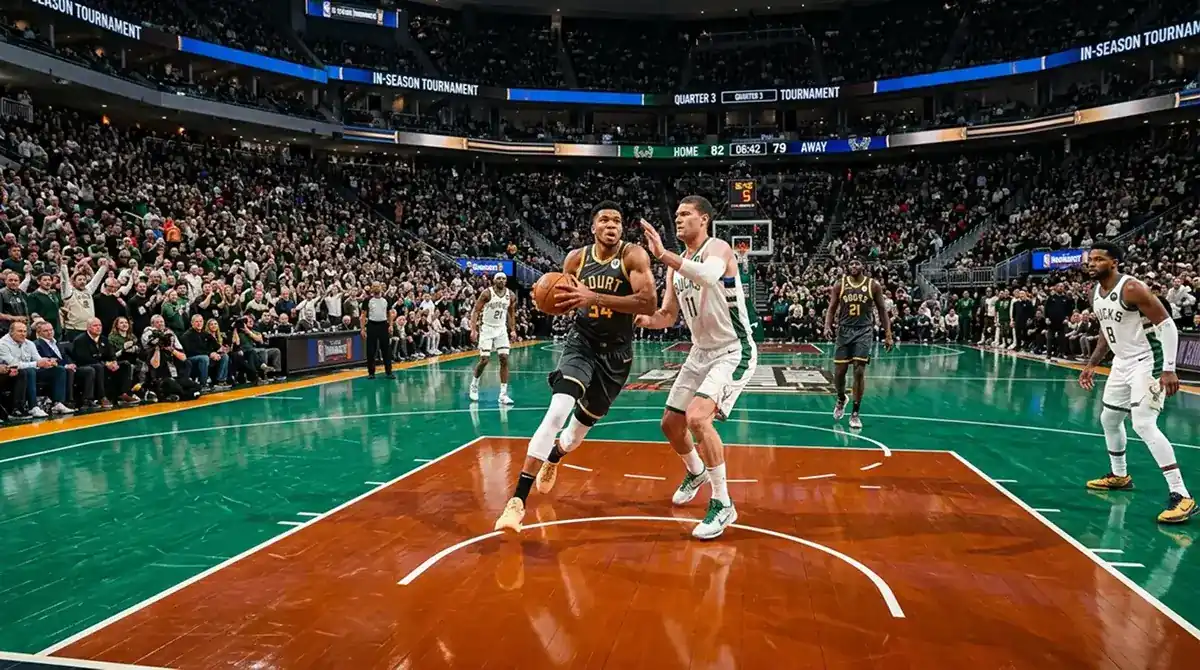
Table of Contents
- The Group-Stage Edge The Books Took A Year To Catch
- What The NBA Cup Actually Is
- Where Cup Group-Stage Pricing Differs From Regular Season
- Knockout Round Pricing Dynamics
- The Outright Markets
- Motivation Curves Through The Tournament
- Player Props In Cup Games
- Cup-Specific Promo And Boost Markets
- The Wider NBA Cup Market Context
- The Cup As A Mid-Season Project
The Group-Stage Edge The Books Took A Year To Catch
The NBA Cup is a relatively new tournament, and that newness has been its primary feature for UK bettors over the first three iterations. In the inaugural 2023 Cup, books were pricing group-stage games as if they were standard regular-season fixtures. They weren’t. Coaches were rotating starters more aggressively, second-unit minutes were inconsistent, and the cup-specific prize money created motivation patterns that didn’t match a normal Tuesday in November.
By the 2024 and 2025 editions, books had calibrated. The lines had absorbed cup-specific dynamics. But pockets of inefficiency still exist, especially around games where the standings outcome is no longer mathematically interesting. Eight years on this desk and I treat the NBA Cup as a separate calendar within the season – different motivation curves, different markets, different opportunities.
What The NBA Cup Actually Is
The NBA Cup is the league’s in-season tournament, structured with group-stage play in November, knockout rounds through early December, and a final concluded by mid-December. All 30 teams participate. Group stage games count toward regular-season standings; knockout games do not (with the exception of the championship game, since 2024). Prize money for players (around $500,000 per winning player at last update) creates motivation that varies by team.
Adam Silver said at the NBA Cup Final in December 2025 that competitive integrity is the league’s top priority – a statement made at this specific event, in part, to reinforce the cup’s stature. The league has invested heavily in marketing the tournament, and broadcast coverage in the UK through Sky Sports has expanded since the inaugural year.
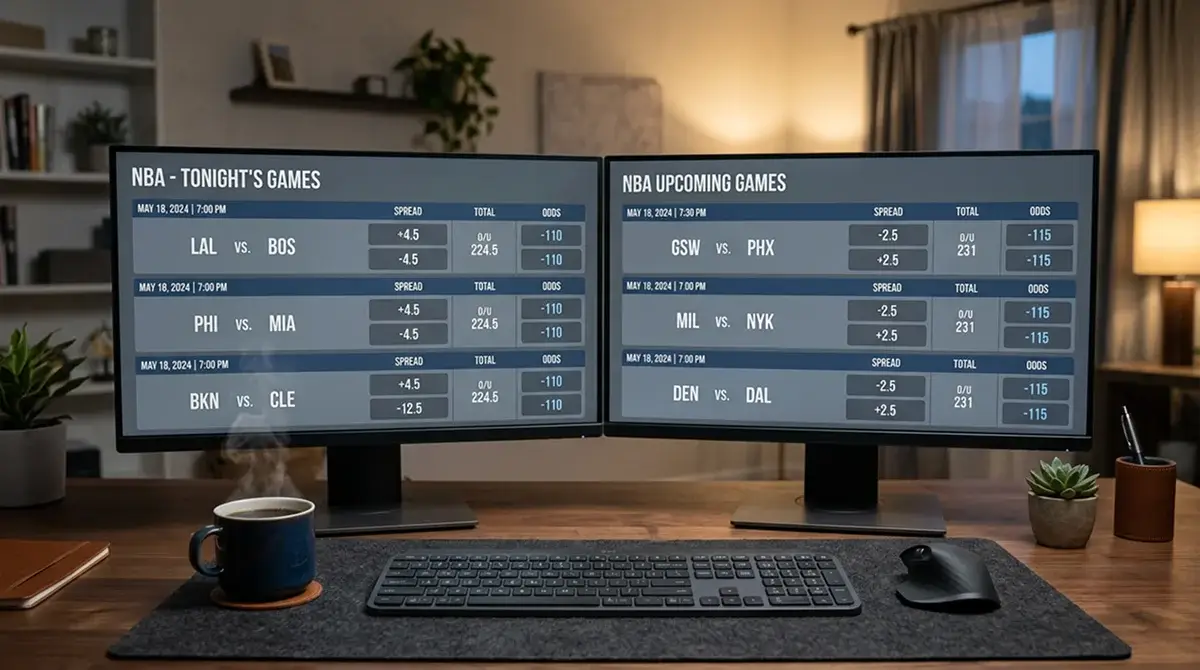
UK books – bet365, William Hill, BetVictor, Unibet, Betfred – list the same 50+ markets per fixture for cup games as for regular-season games, plus tournament-specific markets: cup winner outright, group winner, knockout-stage advancement.
Where Cup Group-Stage Pricing Differs From Regular Season
Group games count for regular season standings, so teams play with normal rotations and standard intensity. But the prize-money incentive lifts performance levels meaningfully when a team is genuinely contending for cup advancement. Conversely, teams that have lost early group games and are mathematically eliminated will sometimes coast through the final group game.
The 2025/26 NBA pace at 101.9 possessions per 48 minutes – highest in 30 years – and offensive efficiency at 114.3 per 100 possessions, near the all-time peak of 114.5, are season averages. Cup group games tend to run slightly above season pace because both teams are pushing for tiebreaker advantage on points scored. The first 10 days of the 2025/26 season averaged 117.7 points per game, third-highest in NBA history; cup group games run a few points higher than that on average.
This pace bump is now priced into cup totals. Books raised their cup-game total expectations after the 2023 inaugural edition. So the easy edge from the first year is gone. Where edge remains: in the specific game when a team has clinched advancement and is dialling back intensity, while the opponent is still pushing for their own advancement.
Knockout Round Pricing Dynamics
The knockout rounds of the NBA Cup feature single-elimination games. Quarter-finals, semi-finals, final. Single-game stakes mean the variance is meaningful – favourites can lose to underdogs in a way they wouldn’t over a 7-game series.
Books price knockout-game spreads tighter than regular-season equivalents. A team that would be favoured by 7 in the regular season might be favoured by 5.5 in a cup knockout because the underdog’s increased motivation is real. That increased motivation includes the prize money but also the prestige of advancing.
Single-elimination format also affects player rotations. Coaches lean more heavily on starters, less on benches, in cup knockouts than in regular season. Star points props lift accordingly; bench-player props deflate. The 22 December 2025 NBA injury report rules – every 15 minutes during the gameday window, 11:00-13:00 for evening tips, 8:00-10:00 for early tips – give pre-game intel reliably for cup games as for regular-season games. But the rotation patterns require a separate read for the cup format.
The Outright Markets
Cup winner outright markets open before the regular season starts and update continuously. By group stage, the prices reflect both the pre-season modelling and any early indicators of team form.
| Cup outright market | Where edge lives | Common bettor mistake |
|---|---|---|
| Cup winner | Pre-tournament longshots with paths | Backing the obvious favourite at short odds |
| Group winner | Mid-group when standings clarify | Pricing too late, after edge is gone |
| To reach knockout | Early group stage | Underweighting motivation factor |
| Final four exact | Pre-knockout phase | Treating as pure probability rather than path-dependent |
Cup winner outrights are typically dominated by the same handful of teams that lead championship futures markets. Where edge appears: on mid-tier teams (those at 30-50/1 for championship) whose specific group draw and knockout path is favourable. Books price the cup winner as a function of championship-implied probability, but the cup is a small-sample tournament where second-tier teams have a real chance of going on a run.
Group winner markets sharpen quickly through the group stage. By the third group game, the lines reflect actual standings and tie-breaker positioning. The early group games are where group-winner edges concentrate, before the standings have settled.
Motivation Curves Through The Tournament
The single most underappreciated cup-specific input is motivation. NBA teams in November are not at peak intensity for every game. The cup creates a stratified motivation curve.
Teams in the running for cup advancement: high motivation in remaining group games. Players visibly more energetic, defensive intensity higher. Lines often slightly underprice these teams.
Teams already advanced: motivation drops in the final group game. Coaches sometimes rest stars or load-manage. Lines often slightly overprice these teams in their final group fixture.
Teams mathematically eliminated: motivation varies. Some teams play hard out of pride; others coast. The tells are usually in the pre-game shoot-around energy and the starting lineup announcement.
Stats Perform’s Andrew Skweres has talked about how books integrate context into pricing – he noted “a sportsbook saw a 1.3× increase in bet count and double the average stake size after they included a contextual stat next to markets”. Motivation is one of the contextual factors books are layering in, but the granularity isn’t yet at the level where every motivation-driven mismatch is caught. Bettors who track the standings closely and read coaches’ rotation hints find the gaps.
Player Props In Cup Games
Player props in cup group games run similarly to regular-season equivalents because group games count for the regular-season record. Star usage rates and minutes patterns are normal.
Player props in knockout games shift. Stars play more minutes (35-40 versus the regular-season 32-36 norm), bench rotations shrink, role players see fewer minutes. The book adjusts these projections, but the magnitude of the adjustment varies. Where the line still underestimates the lift: stars with high standalone usage rates who become even higher-usage in single-elimination. The bet is a points or PRA over for these stars.
The 19% of NBA games decided in the fourth quarter – based on analysis of 2,295 games – applies in cup knockouts but with a sharper edge: the prize-money incentive in close knockout games keeps starters on the floor longer, which lifts their counting stats. Star points props in cup knockouts that go into the fourth quarter close (within 8 points) routinely cash because of this.
Cup-Specific Promo And Boost Markets
UK books push cup-specific promos heavily. Boost markets, “win your money back if your bet loses by X” specials, enhanced odds on specific outcomes. Most of these are fairly priced for casual bettors but lose appeal at scale.
Where genuine value occasionally appears: enhanced-odds boosts on outright markets early in the cup when the book has decided to feature a particular underdog as a marketing hook. A 28/1 boost on a team that’s actually 22/1 fair value is +EV by 6 cents per dollar; size accordingly.
UK adult gambling participation is at 48%, with online sector GGY £7.8 billion for FY ending March 2025 and remote betting GGY £2.4 billion. Andrew Rhodes, the UKGC chief executive, has spoken at industry briefings about wider sports offerings (basketball, NFL, cricket) growing meaningfully. Cup boost markets are part of how books market the tournament. The Gambling Commission has issued over 770 cease-and-desist notices since April 2024, with 262 to operators and 205 to advertisers, reinforcing that regulated UK books are competing carefully on quality. Boost prices reflect that competitive pressure.
The Wider NBA Cup Market Context
The NBA Cup has been a media product success – Sky Sports NBA viewership in the UK is up 40% since 2019, the NBA app is up 52% in the UK since its September 2023 launch, and the league’s overall $77 billion media deal includes specific cup positioning. UK books treat the cup as a flagship product behind only the Finals.
The Federal indictments unsealed on 23 October 2025 – charging 34 individuals including Chauncey Billups and Terry Rozier – and Adam Silver’s December 2025 NBA Cup Final remarks reinforcing competitive integrity, both sit in the broader regulatory backdrop. UK cup markets are tightly priced and tightly monitored. Edge in cup markets requires the same preparation as edge in regular-season markets – sometimes more, because the casual money concentrates here too.
For a deeper look at how playoff postseason dynamics shape the rest of the NBA betting calendar, my piece on how UK bettors approach the NBA postseason covers the longer-form tournament window that the cup compresses into a few weeks.
The Cup As A Mid-Season Project
NBA Cup betting works best when treated as a focused project across November and early December. Track standings closely, identify motivation mismatches in the final group games, watch knockout draws for path advantages, take outright value when it appears in mid-tier teams. The cup compresses tournament dynamics into a few weeks, which means edge windows are short but real. The bettors who calendar the cup carefully – knowing when group standings settle, knowing when knockouts are scheduled, knowing which teams have rested stars in past cup games – extract value the broader market overlooks. The cup isn’t the regular season, isn’t the playoffs, and shouldn’t be priced as either.
Do NBA Cup group-stage games count toward the regular season?
Yes. Group-stage games count toward each team’s regular-season win-loss record. Knockout games do not, except for the championship game which has counted as a regular-season game since 2024.
Are NBA Cup totals higher or lower than regular-season totals?
Slightly higher in group-stage games, where teams push for tiebreaker positioning by scoring more. Knockout games run closer to playoff-style totals, with pace dropping and defensive intensity rising.
Where is the most consistent edge in cup betting markets?
Final group games where motivation mismatches exist between teams already qualified and teams still pushing for advancement. Books have improved at pricing the cup over three iterations, but motivation-driven edges still appear consistently.
Written by the editors at bet of the day nba.