NBA Line Shopping UK Books: Maximize Your Betting ROI
 Available in US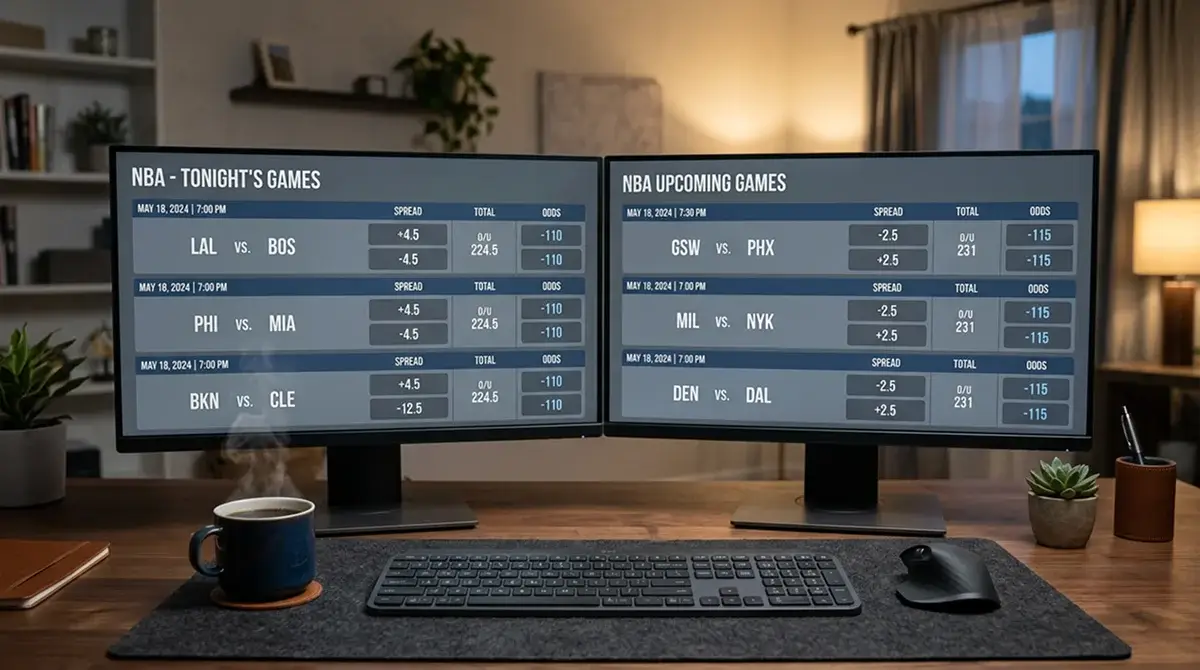
Two cents. That was the difference between the price I took on a Bucks total in November and the best available price across UK books that night. I had not bothered to check. Multiply that lazy two cents across 200 bets in a season, factor in that some of the gaps are five cents not two, and the maths becomes embarrassing for any bettor who claims to care about ROI. Line shopping is the most undervalued discipline in NBA betting, and it is also the most boring.
This is the working version of why those cents compound, which UK books drift in which direction, and how to build a 90-second pre-bet routine that captures the difference without becoming a full-time job.
The Financial Impact of a Few Cents Per Bet
Suppose you place 200 NBA bets in a season, each at a stake of £20. If you average two cents better per bet – taking 1.93 instead of 1.91, say, on a roughly 50-50 shot – your expected value over the season improves by an amount that looks small per bet but stacks. Two cents on a £20 stake at decimal odds in that range is roughly 22 pence in expected value per bet, multiplied by 200, which is £44.
That £44 is your money. It is also a fairly conservative example. The gap between the best and worst available UK price on an NBA prop is often four to six cents, not two. On thin markets – alt totals, niche player props, in-play lines – the gap can run wider still. A line-shopping bettor who systematically captures four to five cents per bet across 200 bets at £20 stakes is recovering £100 to £120 of pure ROI compared with the bettor who places every bet on the first book they see.
That figure scales linearly with stake. Double the stakes, double the recovery. Place 400 bets a year instead of 200, double the recovery. The discipline does not require any betting skill at all – it requires the willingness to spend 90 seconds checking three or four screens before submitting a bet. The bettor who treats line shopping as optional is voluntarily forfeiting one of the cleanest sources of ROI available in the UK NBA market.
What makes the discipline doable is that you do not need to check every book on every bet. You need to know which books tend to drift in which direction on which markets, and consult the relevant subset of the field for the specific bet you are placing. That is the practical version of line shopping, and it is what I will spend the rest of this piece describing.
Which UK Books Tend to Drift Off Market
Top UK bookmakers including bet365, William Hill, BetVictor, Unibet and Betfred all routinely list 50 or more markets per NBA fixture, but they do not always price those markets identically – and the patterns of where each book drifts are stable enough to learn.
bet365 sits closest to global market consensus on most major markets – moneylines, main spreads, main totals – because the book’s liquidity is deep enough to absorb sharp money quickly and reprice in line with the broader market. The drift on bet365 tends to live in the prop section, where the depth produces variations that the moneyline desk does not police as tightly.
William Hill drifts toward the sharper end on totals and alt-line variants, which is why I often check William Hill first when betting an over or under. The book seems to run a model that prices these markets with smaller vig than competitors, and the result is a small but consistent edge for the bettor who shops totals there before settling on the price elsewhere.
Sky Bet and Paddy Power tend to drift toward the slower-to-move end on player props, particularly on combination markets. This is not a criticism – slower props mean a bettor who has done his own work and arrived at a probability estimate has more time to act on a price before it moves. The drift cuts both ways: the props can be soft for the bettor in advance of sharp action, and they can also be slow to reflect injury news once it lands.
BetVictor is the book where I most often find the best price on niche markets – race-to lines, exact margin bands, less-traded prop combinations. The book carries deep markets but operates with smaller volume than the household-name competitors, and that volume profile produces price gaps that do not exist on bet365 or William Hill.
Knowing those tendencies is the difference between checking three books with a purpose and checking three books at random. The purpose lets you find the price gap; the random check lets you confirm what you already had.
The ultimate goal of comparing odds across multiple operators is to consistently generate positive NBA closing line value over the course of the season.
A 90-Second Pre-Bet Routine
The routine that has worked for me sits in three steps. Step one: identify the bet. You have done your work, you have a probability estimate, you know the market and the rough price you expect. Step two: open the two or three UK books that historically post the sharpest or most variable prices on that market type. Step three: take the best price within your shortlist and place the bet.
For a totals bet, my shortlist starts with William Hill, then bet365 as the consensus check, then BetVictor for any flicker of a better price. For a player prop, I start with Sky Bet (which often posts soft props slightly later than the rest of the market), then bet365 for depth, then William Hill as the consensus check. For a moneyline, bet365 and William Hill cover the consensus, and I add a third only when the line has moved sharply in the hours before tip-off.
The whole sequence runs in 60 to 90 seconds with practice. The first time you do it, it feels slow. By the tenth bet, it is reflex. The discipline is not the time investment but the consistency of doing it on every bet, including the bets where you “know” the price is fine. Half the gains come from the bets you would not have shopped if you had not made the routine automatic.
The most common mistake I see is bettors who check the second book and find a price that is the same or worse than the first book, then assume their first price was sharp. It usually was not – the consensus simply confirmed it. The third check is what catches the genuine outlier, and skipping it is the false economy that costs you the cents you set out to capture.
Tools and Screens You Can Use Legitimately
Odds comparison sites cover the major UK NBA markets reasonably well – moneyline, spreads, totals – but their coverage of niche markets and player props is patchy. The reason is that the comparison sites scrape data feeds that are easier to standardise on the headline markets and harder to reconcile across operators on the deeper props menus. For your high-volume bets on main markets, comparison sites are useful as a first pass. For your prop-heavy slip, the comparison data is incomplete and you still need to log into individual books.
Browser extensions exist for line shopping but most of them are oriented toward the US market and do not handle UK operators well. The cleaner solution for a UK punter is bookmarking the relevant pages on three or four books and using browser tabs to compare in real time. It is less elegant than a single dashboard but more reliable than a tool that misses half the UK market.
For player props specifically, the practical tool is a simple personal spreadsheet that tracks which book tends to post the longest line on which prop type. Once you have logged 30 or 40 props across the operators you use, you start seeing patterns – Book A tends to post higher rebound lines, Book B tends to post lower assist lines – and the patterns let you go directly to the relevant book for the relevant prop. That is line shopping with prior knowledge, which is faster and sharper than line shopping from scratch every time.
The other tool that matters is the in-play interface itself. UK book in-play screens vary in latency and refresh speed, and the difference matters when you are trying to capture a price before the next play moves it. bet365’s in-play screen is probably the fastest in the UK market, which makes it the natural anchor for live line shopping. The slower books are not useful for time-sensitive shopping, but they are useful as references when the line moves on the fast book and you want to know whether the move is broader or just venue-specific.
Make line shopping a habit alongside reading the daily breakdowns at bet of the day nba.
Etiquette, Limits and Sharp Detection
This is the part of line shopping nobody enjoys discussing. UK books do limit accounts that demonstrate sustained sharpness, and consistent line shopping followed by consistent winning will eventually flag your account as sharper than the book is comfortable hosting at full stake. The Gambling Commission has issued more than 770 cease-and-desist notices since April 2024, including 262 to operators and 205 to advertisers, with around 64,000 URLs removed in cooperation with Google – the regulator is more active than it has been in years, but the regulator’s job is the illegal market, not protecting individual bettors from being limited by licensed operators.
The practical implications are two. First, do not draw attention to yourself unnecessarily. Withdraw winnings in sensible increments, not in spikes that match obvious betting wins. Use the books for the markets they are best at rather than treating one book as your only home and squeezing it on every market. Second, accept that limits are part of the business. A bettor who has been limited by two of the four books on his shortlist has been demonstrating real edge, and the cost of that edge is reduced stake size on those operators.
The flip side is that line shopping itself is not what triggers limits. The trigger is sustained winning combined with line-shopping behaviour, which is the bookmaker’s signal that the bettor is consistently capturing market-best prices. A losing line-shopper will not be limited because the book is happy to take that action. A winning line-shopper, eventually, will be. The cost-benefit analysis favours doing the work anyway – the limits arrive much later in a betting career than the bettor often fears, and the cents captured along the way fund a meaningful portion of overall ROI.
The discipline lives in the cents. The cents become pounds. The pounds become a season’s recovery against a player who did not shop. None of it is glamorous and none of it is hard – it is just work, repeated, and the bettor who does it gradually outperforms the bettor who does not. If you want to convert the price you take into a probability estimate that lets you judge whether the price was actually sharp, the natural next read is my piece on implied probability and removing the vig.
FAQ
Will UK books limit accounts that line-shop too aggressively?
Eventually, yes, if the line-shopping is paired with sustained winning. The trigger is not the line-shopping itself but the demonstrated sharpness over a meaningful sample. Bettors who line-shop and break even are not limited; bettors who line-shop and win consistently are. The arrival of limits is delayed by spreading volume across multiple operators rather than concentrating on one.
Do odds comparison sites cover the full UK NBA market?
They cover the major markets – moneyline, spreads, main totals – well enough to be useful as a first pass. They cover player props inconsistently, and on niche markets like exact margins or race-to lines they are usually incomplete. For a prop-heavy slip, expect to do most of your shopping by checking individual book pages directly.
Published by the bet of the day nba team.