Responsible NBA Betting UK: Setting Limits That Actually Hold
 Available in US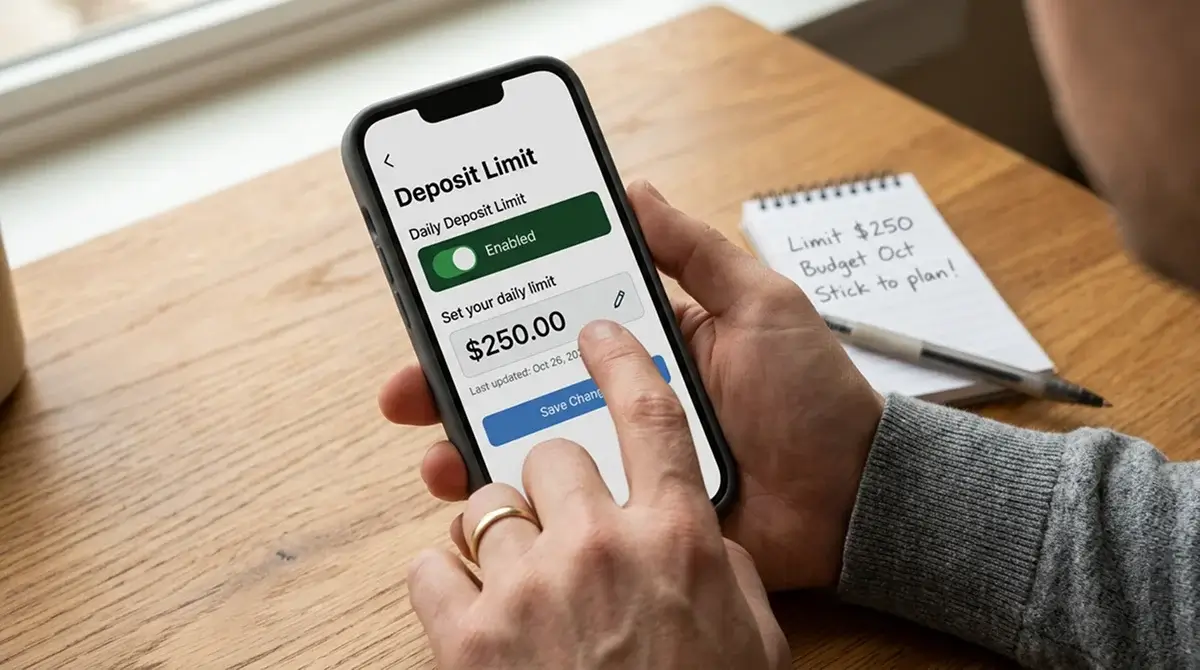
Table of Contents
- The Limit I Almost Didn’t Set
- What Responsible Betting Actually Means
- The Tools UK Operators Must Provide
- The Limits I Actually Use
- Recognising Patterns That Need Adjustment
- Record-Keeping As Harm Reduction
- The GAMSTOP Question
- Treatment And Support Resources
- Building A Routine That Holds
- The Wider UK Responsible Gambling Picture
- Holding The Line, Long Term
The Limit I Almost Didn’t Set
About four years ago, after a particularly bad weekend of NBA betting where I’d chased losses on a Sunday after losing on the Saturday slate, I sat down on Monday morning and set a hard weekly deposit limit on my main betting account. Forty pounds a week. Not because I couldn’t afford more – I could. Because the £40 limit forced me to slow down, do better work, and avoid the chase pattern that had cost me twice my normal stake size that weekend.
That limit is still in place today. It’s the most useful single thing I’ve done as a UK NBA bettor over eight years. Responsible betting isn’t about whether you have a problem; it’s about whether you’re operating with the discipline that long-term success requires. The harm-reduction tools UK regulation makes available to every bettor are practical, free, and underused. This is the article I wish someone had handed me earlier.
What Responsible Betting Actually Means
Responsible betting is a spectrum of behaviours, tools, and habits that keep gambling enjoyable, sustainable, and within healthy boundaries. It’s not synonymous with “you have a problem.” Most UK NBA bettors don’t have a problem. But many bet less responsibly than they could – staking inconsistently, chasing losses, betting more after winning (“house money” thinking), neglecting record-keeping, ignoring the harm-reduction tools available to them.
The UK adult gambling participation rate sits at 48%. Most of those bettors are casual, recreational, and within healthy boundaries. The minority who develop problematic patterns benefit from the same tools that help recreational bettors stay healthy – deposit limits, time-outs, reality checks, self-exclusion when needed.
UK Gross Gambling Yield is at £15.6 billion overall, the highest ever, with online sector GGY £7.8 billion for FY ending March 2025 and remote betting GGY £2.4 billion. Within those numbers, the regulatory structure exists to protect the bettor at every stage. UKGC chief executive Andrew Rhodes has spoken at industry briefings about the framework’s effectiveness depending on bettors actually engaging with the harm-reduction tools available.
The Tools UK Operators Must Provide
Every UKGC-licensed operator is required to provide a standard set of harm-reduction tools. These are accessible from your account settings, usually within 2-3 clicks of the main interface. Standard tools include:
| Tool | What it does | Best use |
|---|---|---|
| Deposit limits | Caps deposits over a daily / weekly / monthly period | Setting a sustainable budget |
| Single-bet stake limits | Caps the maximum stake on any single bet | Prevents tilt-based oversized bets |
| Loss limits | Caps net losses over a period | Hard floor for bankroll exposure |
| Reality checks | Periodic time-on-site reminders | Awareness during long sessions |
| Time-outs | 24h to 6-week account suspensions | Cooling off after bad runs |
| Self-exclusion | 6-month, 1-year, 5-year, or permanent exclusion | When a real intervention is needed |
| GAMSTOP | Centralised UKGC-wide self-exclusion | Comprehensive UK self-exclusion |
| Account history | Full transaction and bet log | Record-keeping and self-analysis |
The tools are free, easy to set, and adjustable. Setting a deposit limit doesn’t mean you can’t deposit more later – you can lower it any time, or raise it after a 24-hour cooling-off period (the upward adjustment specifically takes 24 hours to apply, by regulation). The friction is intentional and modest.
The Limits I Actually Use
Here’s my personal stack of limits, set across the books I use regularly. Not because I think you should copy them exactly – your numbers depend on your situation – but to demonstrate what a working setup looks like.
Weekly deposit limit: a fixed amount that maps to my “leisure spending” budget, not my income. The number doesn’t change with my mood. I set it once, in a moment of clarity, and I don’t adjust it casually.
Single-bet stake limit: maximum 5% of bankroll on any single bet, with most bets at 1-2%. The book limit enforces this for me on a per-account basis as a safety net.
Reality checks: every 60 minutes during any session. The reminder pops up, I take a 30-second pause, ask whether the next bet is a planned bet from my prep or an impulse. If it’s an impulse, I usually skip.
Hard time-out triggers: if I’m down 4+ units in a single weekend, I take a 7-day time-out. No exceptions. The 22 December 2025 NBA injury report rules – every 15 minutes during the gameday window, 11:00-13:00 for evening tips, 8:00-10:00 for early tips – give me reliable pre-game intel, but the time-out trigger isn’t about information availability. It’s about my emotional state, which I can’t reliably assess in the moment.
Recognising Patterns That Need Adjustment
Eight years on this desk and these are the patterns that, in retrospect, signalled a need to re-engage with my limits and tools.
One: betting more after a losing session. The “I just need to win it back” feeling is the loudest signal that responsibility tooling needs to engage. Time-outs work in this moment. Deposit limits prevent the worst-case scenario.
Two: betting on games you wouldn’t normally bet. NBA Cup early-November Wednesday-night games when you usually focus on weekends. The shift in pattern is the signal. Action-seeking is different from edge-seeking.
Three: increasing stake size during a losing run. Chasing variance with size is the fastest way to break a bankroll. Single-bet stake limits cap this.
Four: hiding the activity from someone who’d normally know about it. If you find yourself not mentioning a particular weekend’s bets to a partner or a friend you’d normally share with, that’s the social signal.
Five: feeling worse after winning than after losing. The “I should have bet more” thought after a winning bet is sometimes a tell that the bet wasn’t really planned – and that you’re operating in action-seeking mode rather than edge-seeking mode.
Andrew Rhodes has been clear at industry events that the regulated UK market’s framework depends on bettors actually engaging with these self-monitoring practices. The Gambling Commission has issued over 770 cease-and-desist notices since April 2024 (262 to operators, 205 to advertisers, with 64,000 URLs removed via Google), reinforcing the regulator’s commitment to making the regulated market the safe option compared to the illegal market alternatives.
Record-Keeping As Harm Reduction
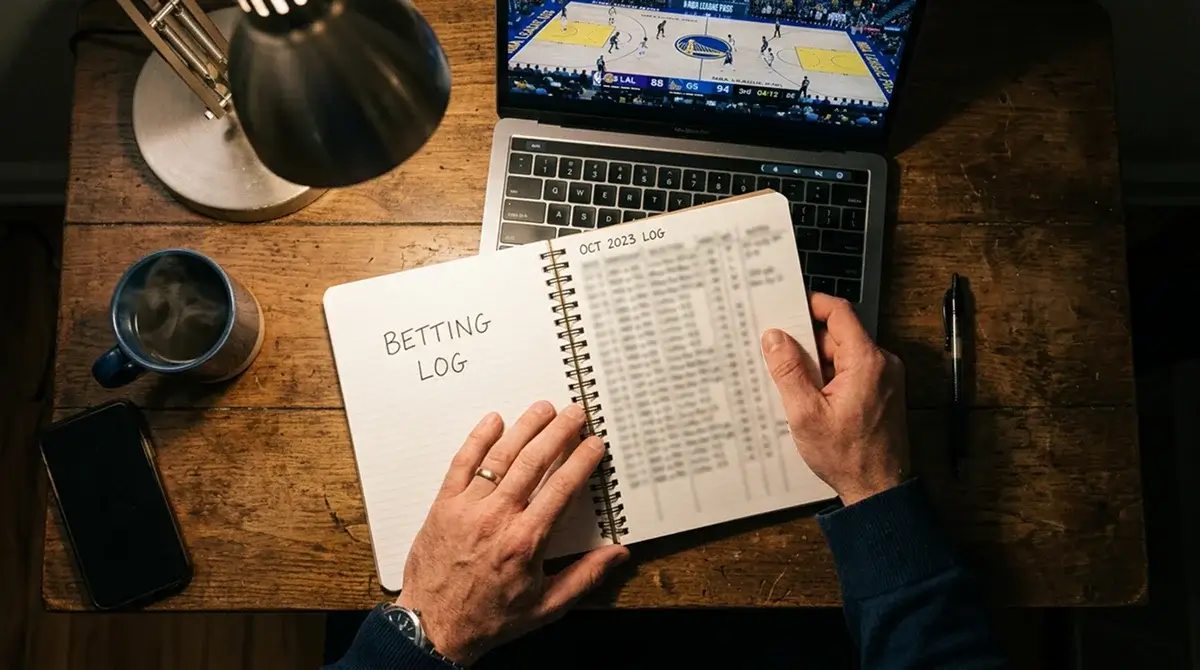
One thing I do that goes beyond standard tooling: maintain a separate spreadsheet logging every bet I place, by market type, with stake, return, and a one-line note on why I placed it. This isn’t operator-side tooling – it’s me holding myself accountable.
Why this matters: by week 3 of the NBA season, casual bettors typically forget the structure of their winning or losing patterns. The brain over-weights recent results and under-weights long-term shape. The spreadsheet doesn’t lie. If I’m down 12 units on player props and up 4 units on totals over an 8-week stretch, the spreadsheet tells me clearly. My memory tells me a different story.
Stats Perform’s Andrew Skweres has talked about how books integrate context into pricing – he noted “a sportsbook saw a 1.3× increase in bet count and double the average stake size after they included a contextual stat next to markets”. Books are using sophisticated tracking on every bet. Personal tracking on your end balances the asymmetry. You’re playing a long-term game; treat it like one.
The GAMSTOP Question
GAMSTOP is the comprehensive UK self-exclusion scheme. Once activated, it prevents access to every UKGC-licensed online operator for the chosen period – 6 months, 1 year, or 5 years.
For UK NBA bettors recognising serious harm patterns in their behaviour, GAMSTOP is the most accessible and effective tool available. The friction of activating it (a 30-minute application process) is intentional, but the effectiveness of the resulting self-exclusion is meaningful. Once activated, you cannot simply create a new account at the same or different UK operators – the cross-operator block is what makes GAMSTOP comprehensive.
Adam Silver said at the NBA Cup Final in December 2025 that competitive integrity is the league’s top priority. The Federal indictments unsealed on 23 October 2025 – charging 34 individuals including Chauncey Billups and Terry Rozier – sit in the broader integrity backdrop. The integrity of NBA games and the integrity of the betting market both depend on bettors operating from healthy positions. GAMSTOP is one of the tools that supports both individual harm reduction and broader market integrity.
Treatment And Support Resources
For UK NBA bettors who recognise harm patterns extending beyond what tooling can address, treatment and support resources are widely available. GamCare offers a 24/7 helpline (0808 8020 133) and online support. The NHS provides specialist gambling treatment through dedicated clinics in several UK regions. The statutory levy on UK operators funds research and treatment infrastructure that supports these resources.
Andrew Rhodes has spoken at industry events about the UK harm-reduction infrastructure being one of the better-funded among regulated markets globally. The 2025/26 NBA pace at 101.9 possessions per 48 minutes – highest in 30 years – and offensive efficiency at 114.3 per 100 possessions, near the all-time peak of 114.5, are technical NBA stats. From a harm-reduction perspective, the more important number is that resources are available, free, confidential, and supported by reliable funding.
If you’re reading this article and recognising more of your own betting patterns than feels comfortable, the right step is engagement with these resources. There’s no penalty for over-caution. There can be significant cost to under-caution.
Building A Routine That Holds
Responsible NBA betting isn’t a one-time decision; it’s a routine. The bettors who maintain healthy patterns over years do specific things consistently:
One, set deposit and stake limits when you open accounts. Don’t wait until you need them. Setting them when you’re calm makes them feel routine. Setting them when you’re already in trouble feels like punishment.
Two, review your account history monthly. Look at the data, not the memory. The pattern matters; the individual bets don’t.
Three, take scheduled breaks. A 7-day time-out every 6-8 weeks of NBA action keeps perspective. The 1,230-game regular season is a marathon, not a sprint, and you can’t be at peak focus year-round.
Four, talk to someone you trust about your betting. Not in detail – just in the sense that someone in your life knows you do it and has the standing to ask “how’s it going?” honestly.
Five, treat tilt as a medical condition. When you’re tilted, you’re not making good decisions, and no amount of skill or knowledge compensates. Walk away. Come back tomorrow.
The Wider UK Responsible Gambling Picture
UK adult gambling participation is at 48%, with online sector GGY £7.8 billion FY ending March 2025 and remote betting GGY £2.4 billion. The 12.7 million monthly active accounts the UKGC reported for Q3 2025/26 (down 2% YoY) means the market remains broad. The Senate Commerce Committee letter from Senators Cruz and Cantwell to Adam Silver in late 2025, while focused on US sports betting, sits within a broader transatlantic regulatory tightening that includes harm-reduction emphasis.
For a deeper look at how UK regulation sits behind every NBA bet you place, my piece on how UK gambling regulation actually works for bettors covers the broader framework that responsible-betting tools sit within.
Holding The Line, Long Term
The most important thing I’ve learned in eight years of UK NBA betting is that the bettor who maintains discipline year over year – using the tools, setting the limits, taking the breaks – outperforms the bettor with sharper analytical skill but worse self-management. The 770 cease-and-desist notices the UKGC has issued, the £150 affordability threshold, the GAMSTOP infrastructure, the statutory levy funding research and treatment – all of this exists because the regulated UK market believes that responsible betting is the foundation of sustainable betting. Set your limits before you need them. Use them when you do. Take breaks scheduled and unscheduled. Keep records that don’t lie. Talk to someone who knows. The framework is built to support healthy long-term engagement with NBA betting; the bettor’s job is to actually engage with the framework.
How do I set deposit limits at UK NBA bookmakers?
Every UKGC-licensed operator includes deposit limit tools in account settings, accessible within 2-3 clicks. Set daily, weekly, and monthly limits independently. Lowering limits applies immediately; raising limits requires a 24-hour cooling-off period.
What is GAMSTOP and how does it work?
GAMSTOP is the centralised UK self-exclusion scheme that, once activated, prevents access to every UKGC-licensed online operator for 6 months, 1 year, or 5 years. Sign up at GAMSTOP’s website with verified identity, and the cross-operator block applies automatically.
When should I take a time-out from NBA betting?
Common triggers: betting more after a losing session, increasing stake size during a losing run, hiding activity from people you’d normally share with, feeling worse after winning than after losing. Any of these patterns is a useful signal to step away for at least 7 days.
Written by the editors at bet of the day nba.